Cooking in a Mykonos villa
Most of the houses we cook in sit on the south and west of the island, where the villas are: Agios Lazaros and Psarou above the bay, Ornos, Aleomandra, Kanalia, and further out towards Kalafatis and Elia. Inland, Ano Mera keeps a quieter, more traditional feel, and Chora puts you a short drive from everything. Wherever you are staying, we come to you.
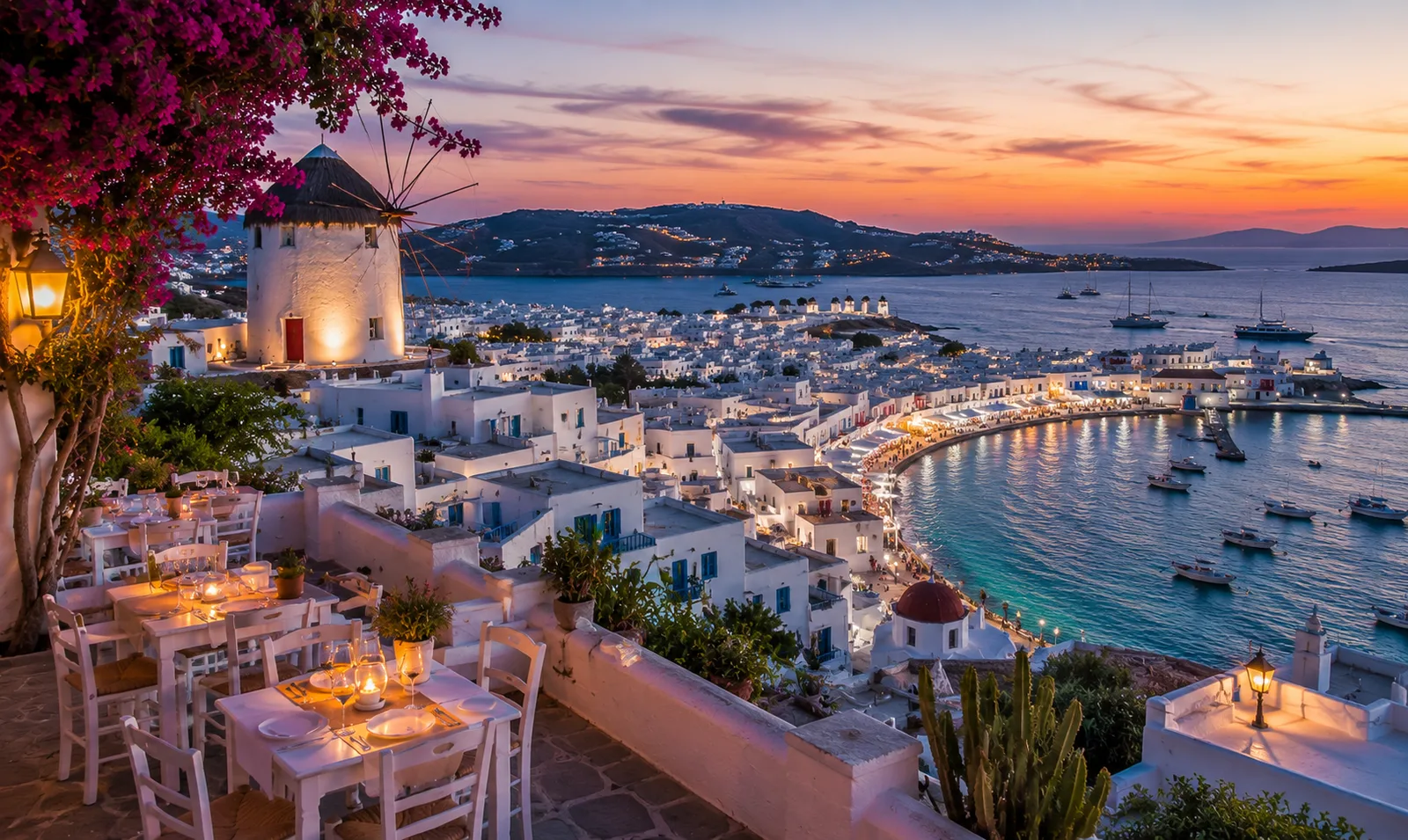
Villa kitchens here are usually open to the living space and face the water, which means the cooking is part of the evening rather than hidden behind a door. It suits the way we work. What it also means is that a chef in Mykonos is cooking in front of your guests, so we bring people who are comfortable being seen.
One local detail that decides more dinners than any menu: the meltemi. The north wind blows hardest in July and August, and it can make the beautiful terrace on the wrong side of the house unusable by nine in the evening. Your chef will have looked at which side of your villa is sheltered before deciding where the table goes.
What the island gives us
The fish comes off the day boats, and what is good changes with the wind as much as the season: red mullet, sea bream, sardines, octopus hung out to dry. We buy what came in that morning rather than promising a species weeks ahead, which is why menus here are agreed the day before rather than at booking.
Mykonos also has its own larder, and it is worth using: kopanisti, the sharp, peppery cheese aged only on these islands; louza, the cured pork the island has made for generations; capers that grow wild on the walls; tomatoes that taste of the place they were grown in. A Greek menu built on those reads very differently from one built on imports.
How a day works here
Mykonos runs late. Breakfast tends to drift towards midday, lunch happens by the pool in swimwear, and dinner rarely starts before nine. Our Full Time and Half Time services are built around that rhythm rather than against it, and the chef plans the shopping around a lunch that may or may not happen at two.
For groups staying a week or more, most guests settle into a pattern by the third day: a light lunch, one long dinner at the house, and a night out in Chora or at one of the beach clubs. The chef works around whichever nights you want to be out, and those are the nights to hand over the kitchen rather than pay for it standing empty.
When to book
The season runs from late April to early October, and the island is at its fullest from mid-July to the end of August. In those weeks the good chefs are committed months ahead, not days, and the villas that need staff have usually arranged it before the guests have booked their flights.
May, June and September are the months worth knowing about: the same island, the same sea, warm enough to eat outside every night, and considerably easier to arrange at short notice.